As healthcare organizations work to reduce their environmental impact, asthma inhalers have become part of a growing conversation about sustainability. Recent discussions in respiratory medicine have focused on the environmental footprint of metered dose inhalers (MDIs), particularly because they use propellants that contribute to greenhouse gas emissions. Some healthcare systems have encouraged increased use of dry powder inhalers (DPIs) as one way to reduce the carbon footprint but this approach is often challenging. rates, varying inspiratory effort, unsuitability for pediatric or frail patients and cost can limit widespread success.
While environmental stewardship is important, the conversation surrounding asthma inhalers is more complex than simply replacing one device with another for the sake of sustainability. Obviously, effective asthma management depends on many factors, including medication delivery, patient coordination, inhaler technique, adherence, disease control, and individualized treatment decisions. However, improving outcomes for patients may also help reduce unnecessary inhaler use and avoid preventable healthcare utilization that carries its own environmental burden.
For patients, clinicians, and healthcare organizations, sustainable asthma care requires a balanced approach that considers both environmental goals and effective respiratory treatment.
Why Are MDIs Part of the Sustainability Discussion?
Metered dose inhalers (MDIs) for asthma and COPD treatment use hydrofluoroalkane propellants (HFAs) to deliver medication into the lungs. While these propellants are not ozone-depleting, they do contribute to greenhouse gas emissions. As a result, MDIs have become part of broader discussions about reducing healthcare-related emissions.
This has led some to advocate for greater use of dry powder inhalers (DPIs), which generally have a lower carbon footprint. Although recent article published in Pulmonology Advisor discussed the possibility that some MDIs prescribed for severe asthma could potentially be replaced with more sustainable alternatives without compromising adherence, inhaler selection is not always straightforward. Not every patient can effectively use every inhaler type, and treatment decisions should continue to prioritize clinical appropriateness, patient ability, and disease management. The discussion is also evolving as manufacturers develop newer low-global-warming-potential propellants designed to reduce the environmental impact of MDIs while preserving their clinical utility.
Disease Control Affects Environmental Impact
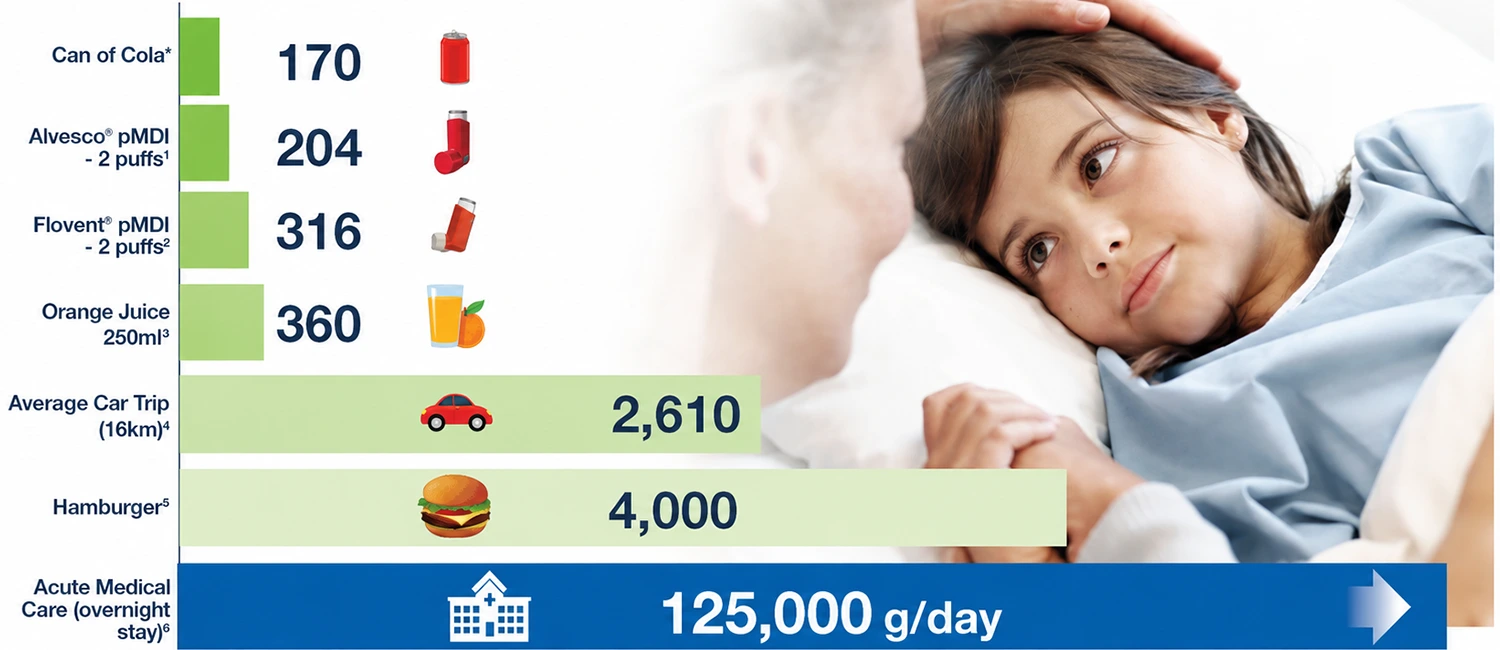
One of the most important points often overlooked in conversations about inhaler sustainability is the relationship between disease control and healthcare utilization. Requiring hospitalization has the highest impact on daily carbon footprint (g CO2e).
Inhalers have a lower impact than a glass of orange juice.1,2,3
Poorly controlled asthma frequently leads to increased rescue inhaler use, emergency department visits, hospitalizations, oral corticosteroid use, and additional healthcare interventions. These outcomes affect patients directly, but they also contribute to the environmental footprint associated with asthma and COPD care.
Research highlighted in recent respiratory literature suggests that uncontrolled asthma may significantly increase healthcare-related emissions. overuse alone accounts for a substantial portion of asthma-related environmental burden in some healthcare systems.
This creates an important shift in perspective: sustainable asthma care is not only about selecting lower-emission devices. It is also about helping individuals achieve better disease control, so they require fewer puffs of rescue medications and avoid preventable exacerbations. In other words, when patients receive medication effectively and maintain better symptom control, the benefits may extend beyond disease management alone.
Why Inhaler Technique Matters
Even the most advanced medication or inhaler cannot perform as intended if it is not used correctly. Many users struggle with inhaler coordination and technique, particularly when using MDIs. Proper timing between actuation of the inhaler and inhalation is essential for effective medication delivery to the lungs. Without good coordination, a significant portion of medication may deposit in the mouth or throat rather than settling in the lungs to treat symptoms.
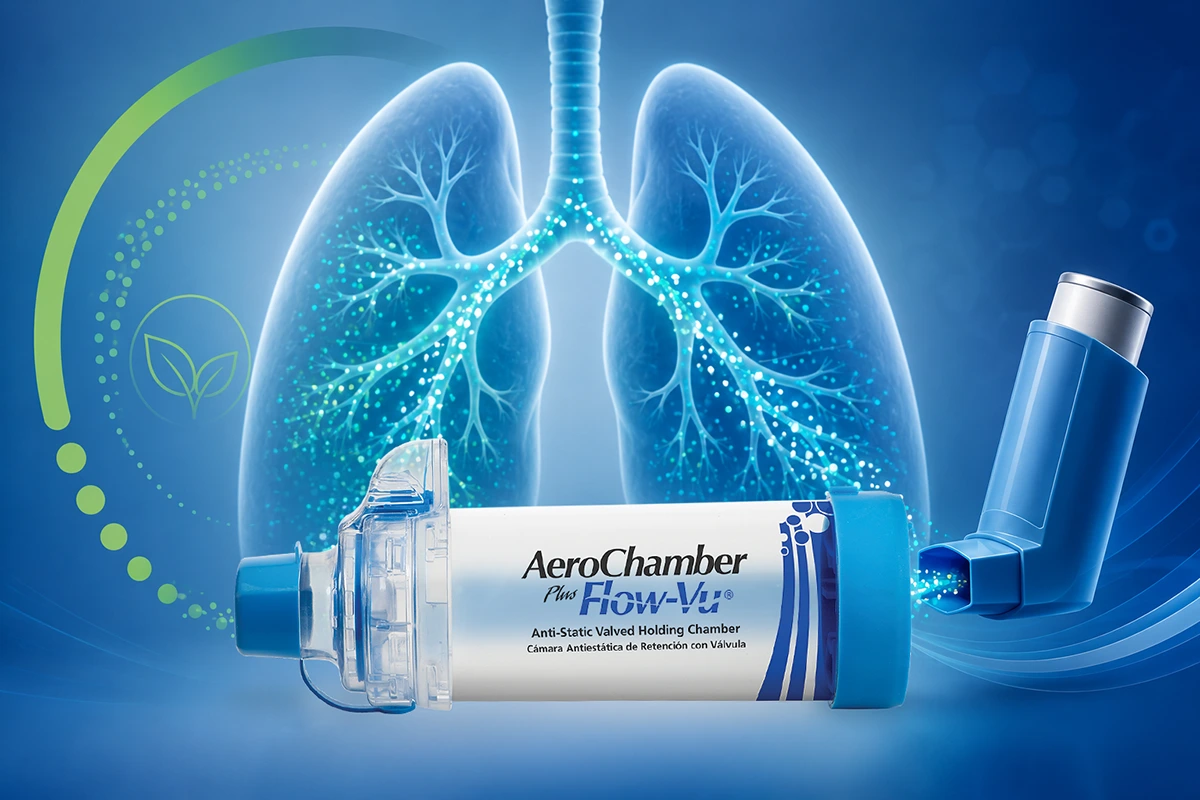
This is one reason valved holding chambers (VHCs) and spacers like Monaghan Medical’s AEROCHAMBER® VHCs are often recommended for appropriate users of MDIs. These devices are designed to help improve coordination and support more effective medication delivery.
Research presented at a CHEST Conference examined pharmacokinetic studies comparing MDI use alone versus MDI use with a spacer. The findings suggested that many patients may achieve improved lung delivery when using a VHC/spacer device compared with MDI use alone even with perfect technique. The same assessment noted potential clinical benefits associated with improved coordination and reduced medication depositing in the mouth and back of the throat.
In practical terms, improving medication delivery may help patients receive more therapeutic benefit from each prescribed dose. This concept is especially important with respect to sustainability in respiratory care. Improving medication delivery may help some patients achieve better symptom control while potentially reducing repeated rescue inhaler use.
Making Every Puff Count
Sustainability discussions often focus on the inhaler itself, but delivery efficiency also matters.
Researchers have also explored how inhaler accessories and delivery systems may influence medication delivery efficiency. The broader principle is important for sustainability discussions: when medication reaches the lungs more effectively, individuals may achieve symptom relief with fewer repeated doses and a lower carbon footprint.
The underlying principle is simple: when medication reaches the lungs more effectively, patients may achieve symptom relief with fewer repeated doses. Reducing wasted medication and unnecessary inhaler use may support both clinical goals and environmental goals.
This does not mean every individual should use the same device or delivery system. Asthma care should always remain individualized. However, it does reinforce the importance of proper inhaler education, effective medication delivery, and patient-specific device selection.
For healthcare providers, helping patients use inhalers correctly may be one of the most practical and immediate ways to support both respiratory outcomes and responsible resource utilization.
The Future of Sustainable Inhaler Therapy
The future of sustainable asthma care will likely involve multiple strategies working together rather than reliance on a single solution. As inhaler technology, environmental policy, and respiratory care guidelines continue to evolve, sustainability discussions surrounding asthma treatment will likely continue to change as well.
New low-global-warming-potential propellants are already being introduced for some MDIs, helping reduce the environmental impact associated with these devices. At the same time, healthcare systems continue to emphasize patient education, inhaler technique training, improved disease control, and reduction of unnecessary rescue inhaler use. Proper inhaler disposal programs may also become increasingly important as healthcare organizations look for more comprehensive approaches to respiratory sustainability.
Most importantly, clinicians and patients should continue making inhaler decisions collaboratively. Device selection should account for clinical effectiveness, patient preference, inspiratory ability, coordination, adherence, and long-term disease management. No single inhaler type is appropriate for every patient, and sustainable respiratory care should never come at the expense of effective treatment.
A Balanced Approach to Sustainable Asthma Care
Environmental sustainability is becoming an increasingly important part of modern healthcare, and respiratory medicine will continue to play a role in those conversations. However, asthma management is about more than just the carbon footprint.
Helping patients achieve good disease control, improving inhaler technique, reducing unnecessary rescue medication use, and supporting effective medication delivery may all contribute to more responsible and sustainable respiratory care.
—
1 Panigone S, Sandri F, Ferri R, et al. Environmental impact of inhalers for respiratory diseases: decreasing the carbon footprint while preserving patient-tailored treatment. BMJ Open Resp Res 2020;7:e000571. doi:10.1136/ bmjresp-2020-000571.
2 Tennison et al. Health care’s response to climate change: a carbon footprint assessment of the NHS in England. Lancet Planet Health 2021; 5: e84–92.
3 PrescQIPP Inhaler Carbon Footprint Data. Oct 2021. 4 LCA. Greenstep Solutions Technical Report. Feb 2024