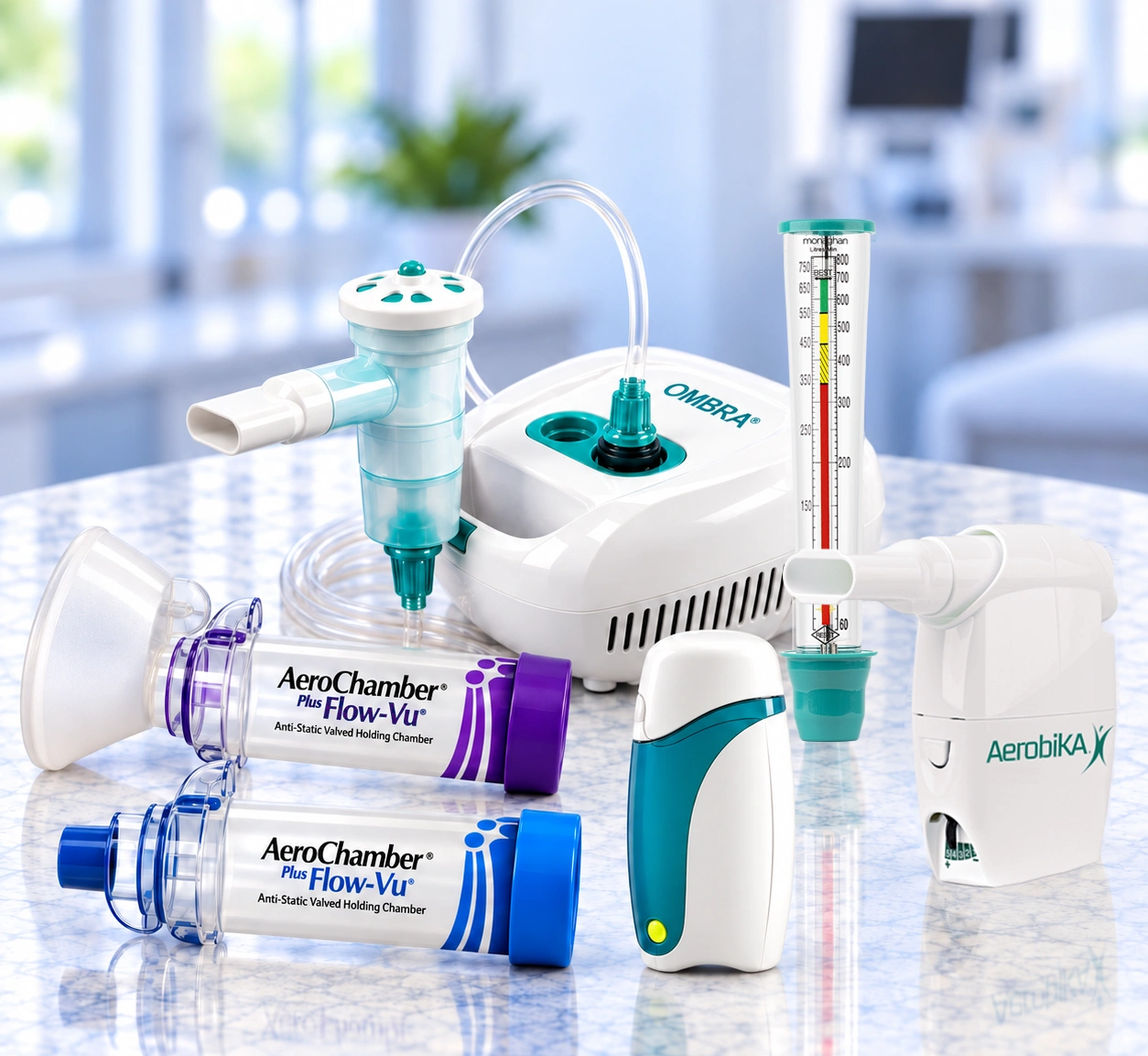
Explore Monaghan Medical Respiratory Devices
Learn about our different respiratory devices, how they are used, and which options may support your respiratory care needs. Select a category below to explore available devices and related information.
A Simple Guide to Choosing the Right Respiratory Device
Respiratory devices serve different purposes. Some help deliver prescribed medication from an inhaler or nebulizer. Others help move mucus from the airways, support lung expansion, strengthen the muscles used for breathing, or monitor changes in airflow.
Choosing the right device depends on your prescribed treatment, the condition being managed, your ability to use the device effectively, and the overall goal of therapy. This guide explains the purpose of several common respiratory device types and provides questions and information to discuss with your healthcare professional.
Use the chart below to identify devices that may complement your current therapy plan. Additional information about each device can be found in the sections that follow.
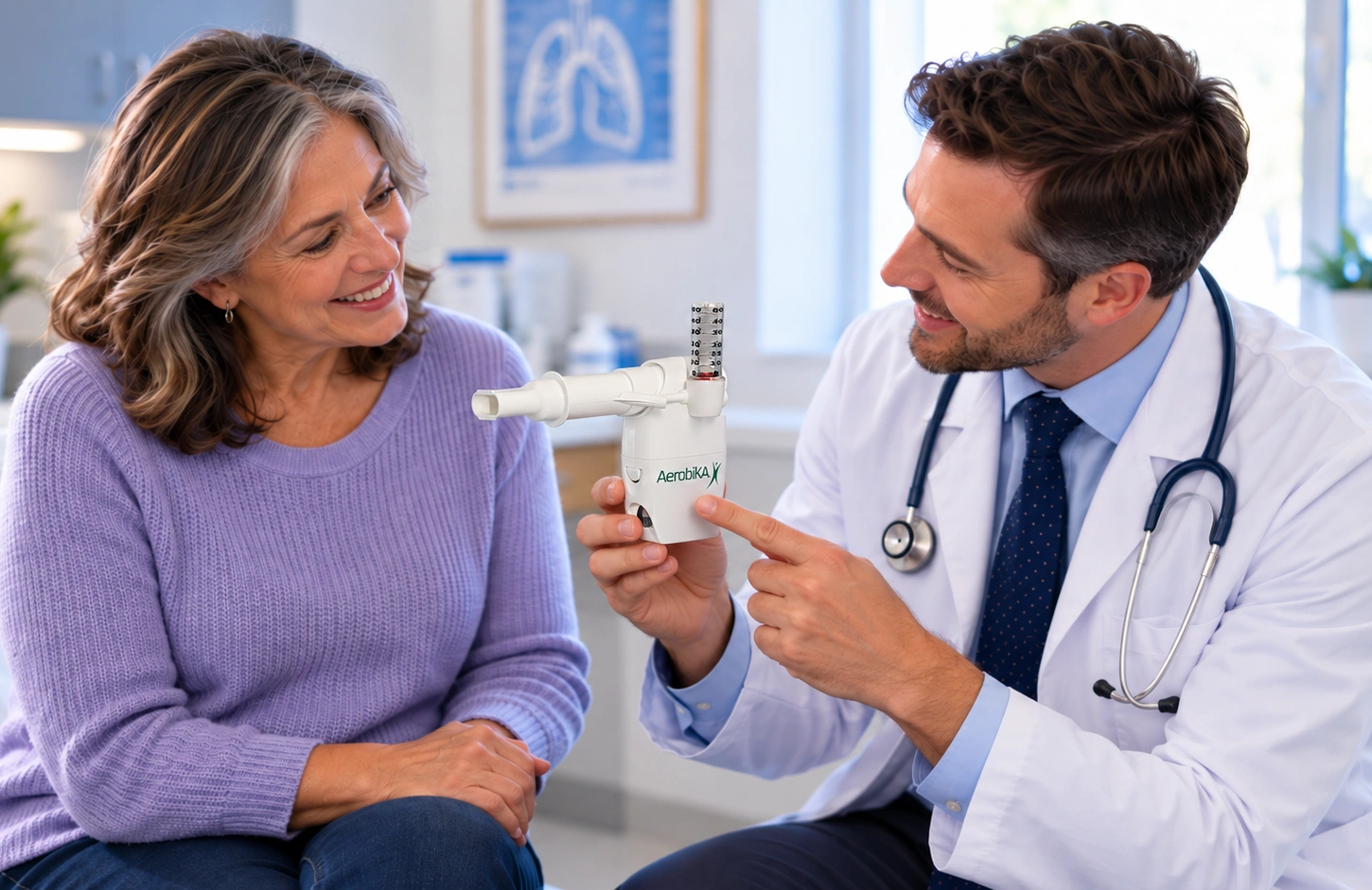
Understanding the Different Types of Respiratory Devices
The right respiratory device depends not only on the condition being managed, but also on how treatment needs to be delivered, your ability to use the device, and the specific treatment goal. Some people may use more than one type of respiratory device as part of their care plan.
| Treatment Goal | When It May Be Used | Device | Monaghan Medical Example |
|---|---|---|---|
| Take medication from an MDI | The patient is prescribed an MDI and is having coordination issues. | Valved Holding Chamber | AeroChamber Plus® Flow-Vu® aVHC or AeroChamber Plus® zStat aVHC |
| Take prescribed inhaled liquid medication | The medication is intended for a nebulizer or the patient has difficulty with an inhaler. | Nebulizer | MC300® Nebulizer |
| Reduce wasted inhaled liquid medication | Breath-actuated delivery is appropriate and the patient has medication intended for a nebulizer. | Breath Actuated Nebulizer | AeroEclipse® II BAN® Nebulizer or AeroEclipse® XL-R BAN® Nebulizer |
| Clear retained mucus | Mucus is difficult to cough out and airway clearance is part of the care plan. | OPEP | Aerobika® OPEP Device |
| Support lung expansion | Positive airway pressure therapy is included in the care plan. | PAP Device | VersaPAP® Device |
| Track changes in airflow | A healthcare professional recommends peak flow readings, commonly as part of an asthma action plan. | Peak Flow Meter | TruZone® Peak Flow Meter |
| Take MDI medications with a tracheostomy | The patient has a tracheostomy tube in place, is breathing on their own, and needs medication from an MDI. | Tracheostomy-compatible VHC | AeroTrach Plus® aVHC |
Take Medication from an MDI
When It May Be Used
The patient is prescribed an MDI and is having coordination issues.
Device
Valved Holding Chamber
Monaghan Medical Example
AeroChamber Plus® Flow-Vu® aVHC or AeroChamber Plus® zStat aVHC
Take Prescribed Inhaled Liquid Medication
When It May Be Used
The medication is intended for a nebulizer or the patient has difficulty with an inhaler.
Device
Nebulizer
Monaghan Medical Example
MC300® Nebulizer
Reduce Wasted Inhaled Liquid Medication
When It May Be Used
Breath-actuated delivery is appropriate and the patient has medication intended for a nebulizer.
Device
Breath Actuated Nebulizer
Monaghan Medical Example
AeroEclipse® II BAN® Nebulizer or AeroEclipse® XL-R BAN® Nebulizer
Clear Retained Mucus
When It May Be Used
Mucus is difficult to cough out and airway clearance is part of the care plan.
Device
OPEP
Monaghan Medical Example
Aerobika® OPEP Device
Support Lung Expansion
When It May Be Used
Positive airway pressure therapy is included in the care plan.
Device
PAP Device
Monaghan Medical Example
VersaPAP® Device
Track Changes in Airflow
When It May Be Used
A healthcare professional recommends peak flow readings, commonly as part of an asthma action plan.
Device
Peak Flow Meter
Monaghan Medical Example
TruZone® Peak Flow Meter
Take MDI Medications with a Tracheostomy
When It May Be Used
The patient has a tracheostomy tube in place, is breathing on their own, and needs medication from an MDI.
Device
Tracheostomy-compatible VHC
Monaghan Medical Example
AeroTrach Plus® aVHC
1. Valved Holding Chambers (VHCs)
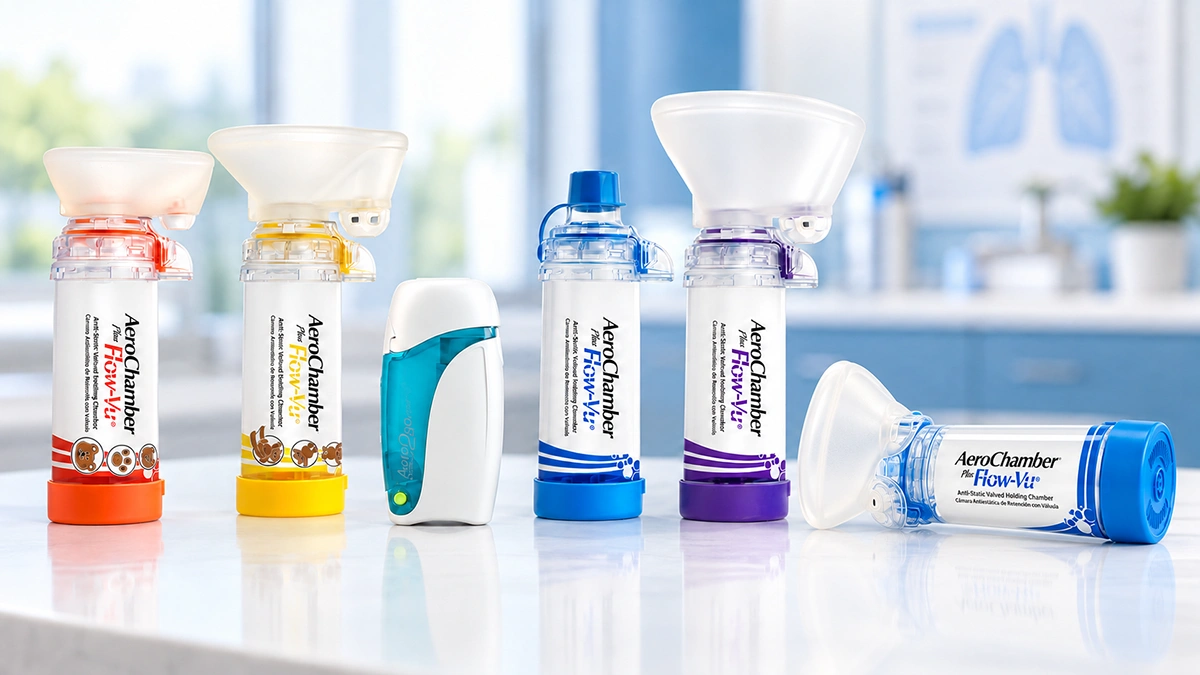
Valved holding chambers are used with metered dose inhalers (MDIs) to briefly hold aerosol medication after it is released from the inhaler. This gives you more time to breathe in and reduces the need to precisely coordinate pressing the inhaler with inhalation. Some VHCs may also be compatible with specific soft mist inhalers (SMIs).
A VHC can also help reduce the amount of medication that deposits in the mouth and throat while supporting delivery of the prescribed medication to the lungs. Compatibility varies by device and inhaler so patients should follow the product instructions and guidance from their healthcare professional.
Patients and caregivers can also use the AEROCHAMBER® Device Comparison Guide to learn more about differences among available chamber options. Monaghan’s current comparison guide distinguishes the devices by factors such as interface, portability, inhalation feedback, and intended use.
Best suited for:
- Patients who use an MDI for conditions such as asthma or COPD (Chronic Obstructive Pulmonary Disease)
- Children or adults who have difficulty coordinating inhaler actuation with inhalation
- Patients who may benefit from additional feedback or assistance with inhaler technique
Examples:
- AEROCHAMBER PLUS® FLOW-VU® aVHC
- AEROCHAMBER PLUS® Z STAT® aVHC
- AEROCHAMBER2GO® VHC, a compact option designed for portability and on-the-go inhaler use
When Is a Valved Holding Chamber Used?
Valved Holding Chambers, or VHCs, are commonly used in conditions where inhaled medications are prescribed through a metered dose inhaler.
Asthma
Inhaled medications are often used as part of asthma treatment and management. When an MDI is prescribed, a VHC can make medication delivery less dependent on precise hand-breath coordination.
Valved holding chambers may:
- Reduce the need to coordinate inhaler actuation with inhalation
- Support delivery of prescribed inhaled medication to the lungs
- Reduce medication loss in the mouth or throat
Chronic Obstructive Pulmonary Disease (COPD)
Many people with COPD use inhaled medications as part of their treatment. A VHC may be appropriate when an MDI is prescribed, particularly if coordination or inhaler technique is challenging.
Valved holding chambers may help:
- Support consistent delivery of prescribed MDI medications
- Improve ease of use for patients with coordination challenges
- Reduce medication deposition in the mouth and throat
2. Oscillating Positive Expiratory Pressure (OPEP) Airway Clearance Devices
Airway clearance devices help move retained mucus out of their lungs when it is difficult to clear naturally. They may be part of a treatment routine for conditions that cause excess mucus production, change the consistency of the mucus, or impair the removal.
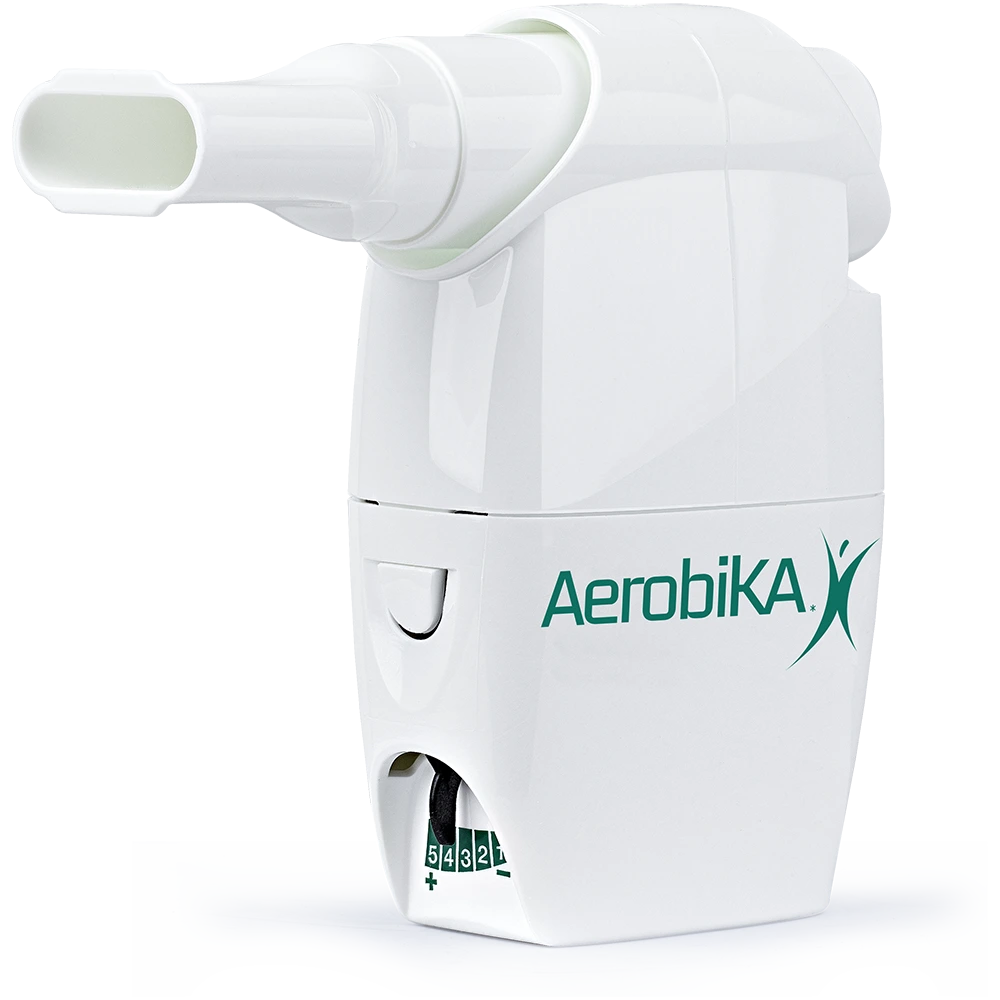
One type, called an oscillating positive expiratory pressure (OPEP) device, creates resistance and gentle pulses of pressure as the user breathes out. These pressure changes help loosen mucus so it can be moved upward and coughed out.
OPEP is different from medication delivery. The primary purpose of the device is to support airway clearance, although some patients may use airway clearance therapy as part of a broader treatment routine that also includes inhaled medication.
Your healthcare professional can help determine which airway clearance approach is right for you.
Best for:
- COPD, bronchiectasis, or chronic mucus buildup
- Patients needing airway clearance therapy
When Are Airway Clearance Devices Used?
Airway clearance devices may be recommended when mucus builds up in the airways and is difficult to cough up.
COPD
Some individuals with COPD produce mucus regularly or have trouble clearing it. Additionally, mucus can contribute to airway obstruction and partial collapse.
A healthcare professional can help determine whether airway clearance should be part of a person’s COPD care routine. Clinicians can refer to The Global Initiative for Chronic Obstructive Lung Disease (GOLD) guidelines for recommend airway clearance techniques as a primary non-pharmacological intervention.
OPEP airway clearance devices may help:
- Loosen and move mucus in the airways.
- Reinflate collapsed areas and get air behind the secretions so it can more easily be coughed out.
- Support and individualized airway clearance routine.
Bronchiectasis
Individuals with bronchiectasis may have more difficulties clearing lung secretions naturally. When mucus remains in the airways, germs can build up and contribute to repeated infections, inflammation, mucus accumulation, and further airway damage.
Airway clearance is an important part of bronchiectasis management. The 2025 European Respiratory Society clinical practice guideline for adult bronchiectasis includes a strong recommendation in favor of airway clearance techniques for most patients with bronchiectasis.
OPEP therapy may help by:
- Mobilizing retained mucus out of the airways, decreasing the cycle of infection and inflammation (known to bronchiectasis patients as the vicious vortex).
- Making mucus easier to cough out.
- Supporting daily airway clearance routines tailored to a person’s needs.
Cystic Fibrosis (CF)
Airway clearance is a cornerstone therapy for individuals with CF because thick sticky mucus can build up in the lungs. The Cystic Fibrosis Foundation Airway Clearance Therapies Clinical Care Guidelines recommend airway clearance therapy for people with CF and emphasize that the choice of technique should be individualized.
- Loosen mucus in the airways decreasing the risk of infection.
- Make mucus easier to cough out.
- Support an airway clearance routine recommended by the CF care team.
Primary Ciliary Dyskinesia (PCD)
Because PCD impairs the normal movement of mucus through the airways, regular airway clearance is an important part of long-term management. Learn more about PCD treatment and airway clearance and the different techniques that may be incorporated into care.
After Surgery or During Acute Conditions
Some people temporarily have difficulty taking deep breaths or clearing mucus after surgery or during an acute illness. Pain, fatigue, weakness, or an ineffective cough can make mucus clearance more difficult.
Depending on the clinical goal, a healthcare professional may recommend airway clearance therapy, lung expansion therapy, or another respiratory intervention. These therapies are not interchangeable, so device selection should be based on the patient’s specific needs.
3. Positive Airway Pressure (PAP) Devices
Positive airway pressure devices provide positive pressure during breathing to support lung expansion. Their primary purpose differs from that of an OPEP device.
OPEP therapy focuses largely on mobilizing retained secretions through expiratory pressure and oscillation. PAP therapy is used primarily to support lung expansion and maintain airway pressure when that is the treatment goal.
Best suited for:
- Patients whose healthcare professional recommends positive airway pressure therapy
- Selected patients who need support with lung expansion
- Some postoperative or hospital-based respiratory care situations
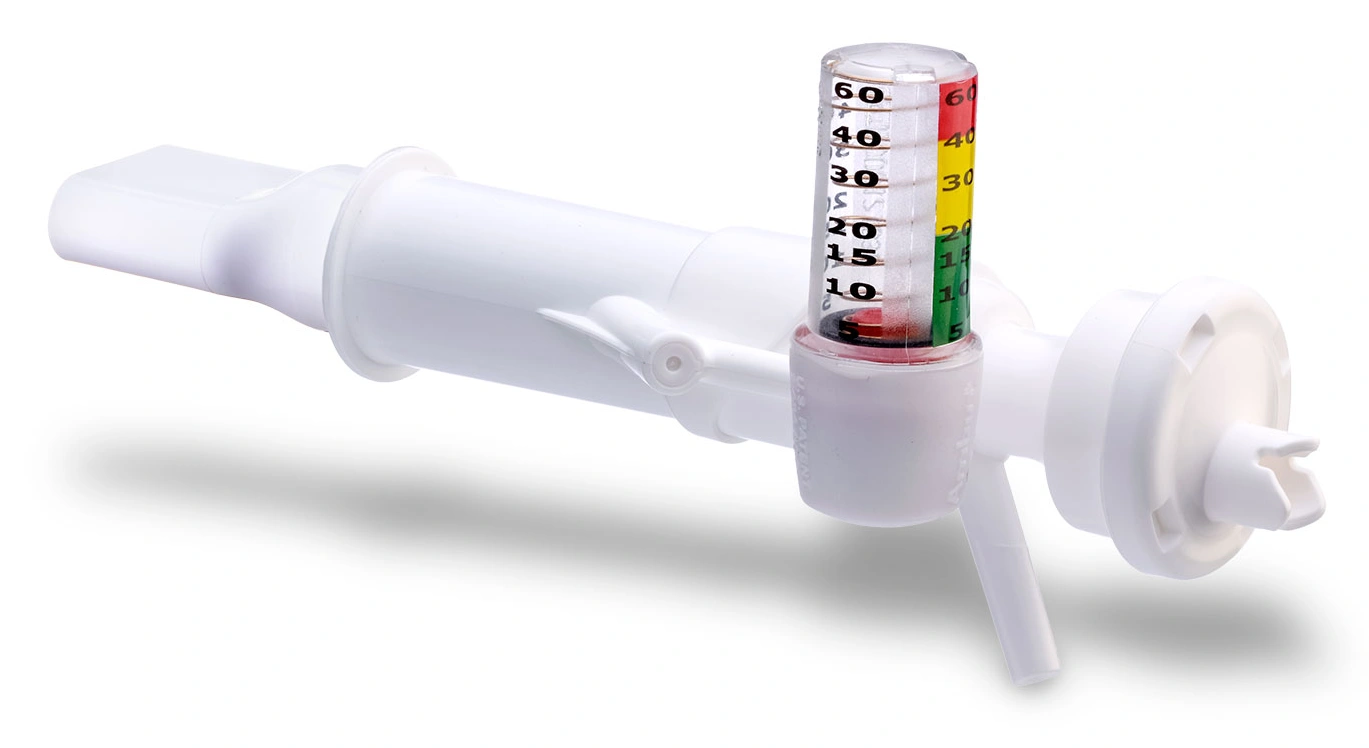
Monaghan Medical example:
When Are PAP Devices Used?
A healthcare professional may prescribe positive airway pressure therapy when supporting lung expansion is an important treatment goal. This may include selected patients at risk for or experiencing areas of reduced lung expansion, including some postoperative patients.
The VersaPAP® Device incorporates a manometer so clinicians and patients can monitor airway pressure during therapy.
PAP therapy may help:
- Provide positive airway pressure to support lung expansion
- Give visual feedback about airway pressure during treatment
- Support a clinician-directed lung expansion therapy program
Can PAP and OPEP Be Used Together?
Sometimes a patient has more than one respiratory therapy goal; for example, both lung expansion and secretion clearance. Monaghan’s AEROVERSE® System and Tandem Therapy allow the VersaPAP® and AEROBIKA® OPEP devices to be used together when both positive airway pressure and oscillating positive expiratory pressure are clinically appropriate.
Combination therapy should be performed according to the device instructions and the treatment plan provided by a healthcare professional.
4. Nebulizers and Compressors
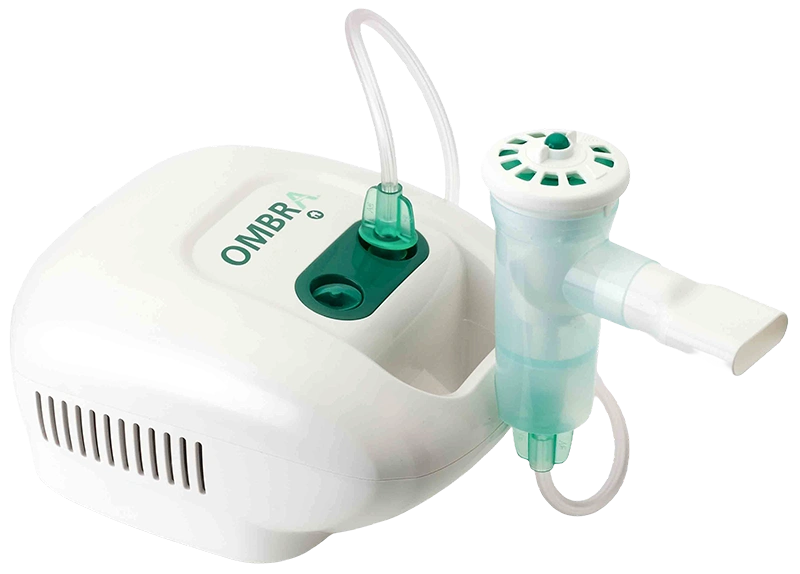
Nebulizers convert liquid medication into a fine mist that is inhaled through a mouthpiece or facemask. With a jet nebulizer, a compressor supplies the airflow needed to create the mist. Unlike an inhaler, which generally delivers a measured dose during one or a small number of inhalations, a nebulizer treatment typically delivers aerosol over several minutes while the patient breathes through the device.
Best suited for:
- Individuals who cannot use inhalers effectively
- Medications that are only available in liquid format
Examples:
- MC 300® Nebulizer
- MC 300® R Nebulizer
- OMBRA® Compressor
When Are Nebulizers Used?
A healthcare professional may prescribe nebulizer therapy if the medication is only available in liquid form or when this method of delivery is a better fit for the person using it. This may include someone who has difficulty using an inhaler effectively, but age alone does not determine the best device. The medication and nebulizer must be appropriate for use together.
Asthma
Some individuals with asthma may be prescribed medication by a nebulizer when that delivery method is appropriate for their treatment — nebulizers may be used when inhalers are difficult to use effectively.
Nebulizers may help:
- Deliver a prescribed liquid medication as a mist over several minutes.
- Provide an option for an individual who may have difficulty using an inhaler effectively.
COPD
For some people with Chronic Obstructive Pulmonary Disease, nebulized medication may be part of ongoing treatment.
Nebulizers may help:
- when a prescribed medication is available as a liquid rather than in an inhaler.
- when an individual has difficulty using an inhaler effectively, including difficulty generating the breath needed for some inhaler types.
- when a healthcare professional determines that nebulized delivery is a better fit for their treatment plan.
Pediatric or Assisted Care Settings
(when a patient needs help with their treatment)
A nebulizer may be an option for a child or adult who needs assistance taking a prescribed inhaled medication. A caregiver can help prepare the treatment, hold the mouthpiece or mask in place, and guide the patient through the treatment.
The healthcare professional should choose the device based on the medication and the patient’s ability to use it effectively, rather than age alone.

5. Breath Actuated Nebulizers
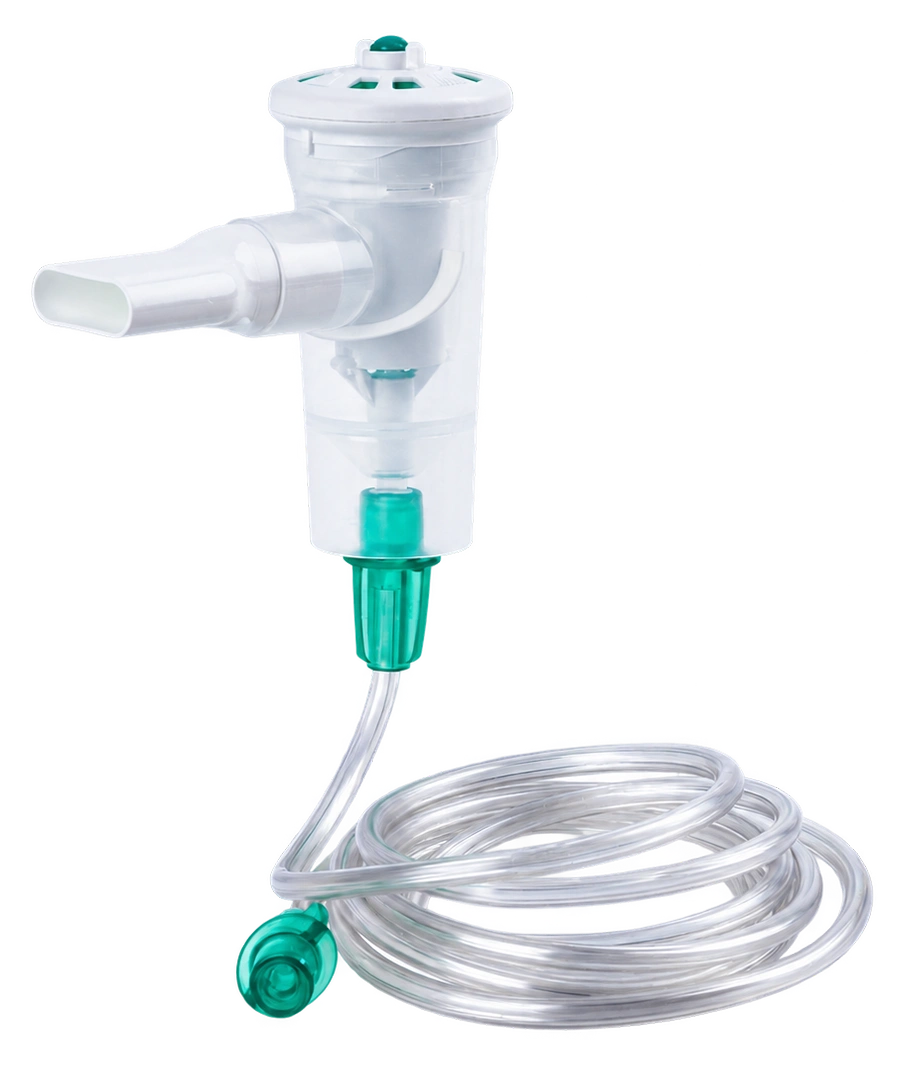
A breath actuated device produces aerosol only when you breathe in and pauses aerosol generation during exhalation or breaks in treatment. Compared with a nebulizer that produces continuous mist, this may reduce medication waste and the amount of aerosol released into the surrounding environment.
Recommended for:
- Patients seeking more efficient nebulizer delivery
- Situations where reducing aerosol loss is important
Examples:
- AEROECLIPSE® II BAN® Nebulizer
- AEROECLIPSE® XL R BAN® Nebulizer
- OMBRA® Compressor
When Should Breath Actuated Delivery be Used?
A healthcare professional may choose breath actuated delivery when limiting medication loss or aerosol released into the treatment environment is important and the patient can trigger the device with their inhalation. These high efficiency nebulizers may be used in situations where efficiency and controlled delivery are important.
COPD, Bronchiectasis, Cystic Fibrosis, and Primary Ciliary Dyskinesia (PCD)
Individuals with chronic respiratory conditions such as COPD, bronchiectasis, CF, and PCD may be prescribed different types of inhaled medications. Some of these medications are used as adjuncts for airway clearance therapy and hydrating the secretions on a daily basis to help mobilize mucus.
Breath actuated nebulizers may help:
- Deliver an effective dose of medication to the lungs by only nebulizing during inhalation
- Reduce medication loss during exhalation or pauses in treatment
- Limit the amount of aerosol released into the room reducing secondary exposure for others that are in the treatment environment
The medication, nebulizer, compressed air source, and treatment settings should always be used in accordance with their respective instructions and the recommendations of the healthcare professional.
6. Respiratory Muscle Trainers
Respiratory muscle trainers add resistance as you breathe in, breathe out, or both. Repeated use at a resistance is intended to strengthen the muscles used for breathing. Inspiratory muscle training (IMT) targets the muscles that draw air in; expiratory muscle training (EMT) targets the muscles used to breathe out forcefully and cough.
Respiratory muscle training serves a different purpose from inhaled medication delivery, airway clearance, or positive airway pressure therapy.
When Are Respiratory Muscle Trainers Used?
A healthcare professional may recommend respiratory muscle training as part of a broader care or rehabilitation plan, including for selected people with chronic respiratory conditions such as COPD. The type of training, resistance, and schedule should be tailored to the person’s abilities and treatment goals. Training the breathing muscles is a different goal from delivering medication or clearing mucus.
Recommended for:
- Patients whose healthcare professional identifies a need for respiratory muscle training
- People following a supervised respiratory rehabilitation plan that includes IMT, EMT, or both
Example:
- Respiratory muscle trainers with adjustable inspiratory resistance
- Respiratory muscle trainers with adjustable inspiratory resistance
- Devices designed to provide both inspiratory and expiratory muscle training
7. Peak Flow Meters
A peak flow meter measures how quickly you can blow air out of your lungs after taking a deep breath in. Recording your readings over time can help you and your healthcare professional notice changes in your breathing. It measures peak flow only but does not provide a complete assessment of lung function.
Best for:
- Asthma management
- Monitoring changes in airflow over time
- Use with a personalized asthma action plan when recommended by a healthcare professional
Example:

When Are Peak Flow Meters Used?
Some individuals with asthma use a peak flow meter as part of their personalized asthma action plan. Comparing a reading with your personal best can help you recognize if airflow is decreasing and follow the steps your healthcare team has outlined and set for you. Peak flow monitoring is used alongside symptom monitoring.
The National Heart, Lung, and Blood Institute notes that a healthcare provider may incorporate peak-flow monitoring into an asthma action plan and that a low reading can sometimes provide warning of worsening asthma before symptoms are noticed. Learn more from NHLBI’s guidance on managing asthma.
Asthma
Some people with Asthma use peak flow meter as part of a personalized asthma action plan.
Peak-flow monitoring may help:
- Measure peak expiratory flow
- Trend and track peak flow reading over time and compare with a patient’s personal best.
- Identify early changes in airflow, sometimes before symptoms are obvious.
COPD
A healthcare professional may occasionally ask individuals with COPD to record peak flow readings alongside their symptoms. Changes over time can provide another piece of information to discuss with their care team. A peak flow meter should not be presented as a standard way to measure overall lung function or monitor COPD progression.
Devices may help:
- Provide trends on peak flow readings
- Support discussions with healthcare providers
8. Tracheostomy-Compatible Valved Holding Chambers
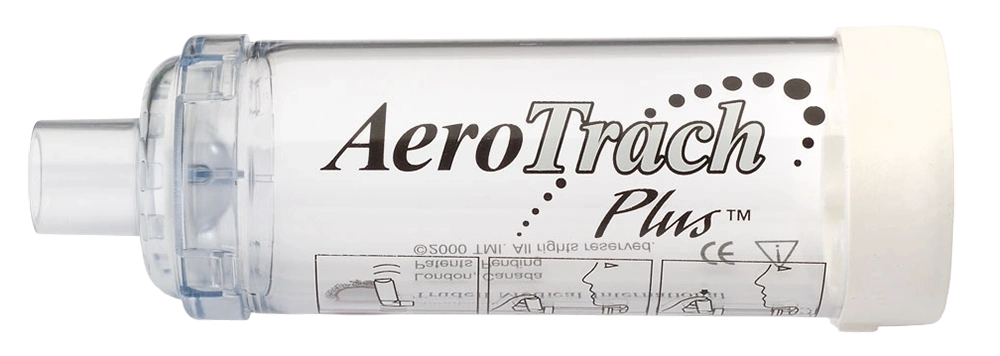
Individuals with a tracheostomy may still need medication from a metered dose inhaler (MDI). A tracheostomy-compatible valved holding chamber connects directly to the tracheostomy and briefly holds medication from the MDI after it is released from the delivery device. This gives patients more time to breathe in and reduces the need to coordinate pressing the inhaler with inhaling.
Recommended for:
- Spontaneous breathing patients with a tracheostomy using inhaled medicine from an MDI
Example:
When Is a Tracheostomy-Compatible Chamber Used?
A healthcare professional may recommend this type of chamber when an individual with a tracheostomy tube is breathing on their own and is prescribed inhaled medication from an MDI. The correct chamber, MDI, tracheostomy interface, and technique should be determined according to the patient’s clinical needs and the instructions supplied with the devices.
Frequently Asked Questions
What is the difference between a nebulizer and an inhaler?
Both are used to deliver inhaled medication, but they work differently. An inhaler typically delivers a measured dose during one or a small number of inhalations. A nebulizer converts prescribed liquid medication into an aerosol that is inhaled over several minutes.
The right delivery method depends on the medication, the patient's ability to use the device, and the treatment plan established by the healthcare professional.
Do I need both a nebulizer and a valved holding chamber (VHC)?
Some people use both because they are prescribed different medications or delivery methods for different situations. A VHC is used with a compatible inhaler, while a nebulizer is used with medication intended for nebulized delivery.
Having one device does not necessarily eliminate the need for the other.
What is a breath-actuated nebulizer?
A device that delivers medication only during inhalation, helping reduce medication loss.
What is the difference between an airway clearance device and a nebulizer?
A nebulizer is used to deliver prescribed aerosolized medication. An airway clearance device is used to help mobilize retained mucus so that it can be coughed out. The two devices have different primary purposes, although some patients may use both as part of the same overall respiratory care plan.
What is the difference between an OPEP device and a PAP device?
An OPEP device combines positive expiratory pressure with oscillations during exhalation to help mobilize retained mucus.
A PAP device provides positive airway pressure primarily to support lung expansion. Depending on the patient's needs, a healthcare professional may prescribe one therapy or may recommend a system that combines both approaches.
Can children use respiratory devices like these?
Some respiratory devices are designed for both adult and pediatric use, but the right option depends on the child’s age, coordination, treatment needs, and clinical guidance.
How do I know which device is right for me?
Device selection should be based on prescribed therapy and clinical guidance.
Important Note:
Respiratory devices should be selected and used according to guidance from a healthcare professional and the instructions supplied with the device. Medication-delivery devices should only be used with medications and configurations appropriate for that device.
This guide is intended to provide general educational information to help patients and caregivers better understand different types of respiratory devices. It is not intended to replace professional medical advice, diagnosis, or treatment.