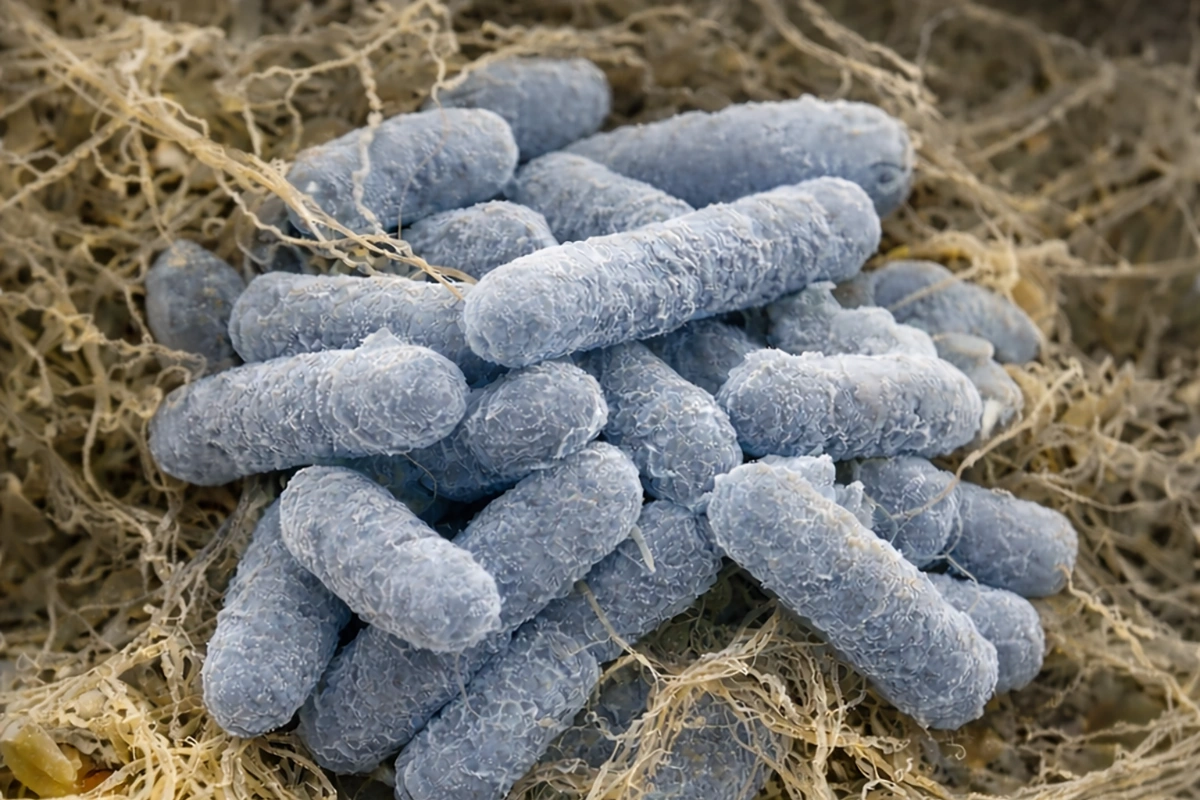
What is Nontuberculous Mycobacteria?
Nontuberculous mycobacteria (NTM), including members of the Mycobacterium avium complex (MAC), are environmentally common bacteria that can cause serious and persistent lung disease in susceptible individuals. A defining feature of NTM is their lipid-rich outer cell wall, which drives slow growth, resistance to disinfectants and antibiotics, and a strong tendency to adhere to surfaces and form biofilms. These biofilms, composed largely of long-chain fatty acids, are highly impermeable and resistant to removal by water flow, allowing NTM to persist in environments such as household plumbing and medical devices. As a result, once infection occurs, NTM disease can be difficult to eradicate even with prolonged, aggressive antibiotic therapy.
Why Test Respiratory Health Devices?
People living with chronic lung conditions like bronchiectasis or Cystic Fibrosis often use respiratory equipment like nebulizers and oscillatory PEP (Positive Expiratory Pressure) devices to clear congestion from the lungs. Naturally, there is a considerable amount of time spent maintaining these devices to keep them clean and safe to use, but for many, the possibility of infection remains a concern. To address those concerns, researchers led by Dr. Joseph Falkinham, professor of microbiology in the Department of Biological Sciences at Virginia Tech, tested whether harmful bacteria like NTM could cling to the inside of two popular Monaghan Medical devices – the AEROBIKA® Oscillating Positive Expiratory Pressure (OPEP) device and the AEROECLIPSE® XL R BAN® Nebulizer.
The findings were presented at the 6th World Bronchiectasis & NTM Conference (2023) in New York City, NY and provided reassuring results: even in a high-risk, “worst-case” exposure test, these devices did not retain meaningful levels of bacteria on their internal surfaces, eliminating the ability for biofilms to form.
How the Study Was Conducted:
To simulate a “worst case” situation, the research team disassembled the AEROBIKA® OPEP and AEROECLIPSE® XL R BAN® Nebulizer devices and submerged them for 24 hours in a dense suspension of Mycobacterium avium — a type of bacteria found in household water and known to cause lung infections in some people. After soaking, each piece was completely air-dried for another 24 hours (without washing) and tested to see how many mycobacterial cells had adhered to various surfaces inside each device.
Mycobacterium counts on materials like stainless steel, copper, galvanized steel, and PVC exposed to lower concentrations of NTM were higher compared to the AEROBIKA® and AEROECLIPSE® devices — the AEROBIKA® OPEP and AEROECLIPSE® XL R BAN® Nebulizer showed minimal bacterial adherence even when soaked in higher concentrations. Per Dr. Falkinham, “We were unable to find enough NTM on the inner surfaces of the AEROBIKA® OPEP or AEROECLIPSE® XL R BAN® Nebulizer in this testing. Because the NTM (nontuberculous mycobacteria)< cells did not attach and thus they could not form a biofilm.”
Key Finding: Even under these worst-case conditions, the AEROBIKA® OPEP and AEROECLIPSE® XL R BAN® Nebulizer did not retain meaningful levels of bacteria. In other words, Mycobacterium avium largely failed to stick to the polymers and components that make up both devices.
What the Results Mean for Everyday Users
These findings demonstrate that the design and materials used in Monaghan Medical’s devices make it difficult for harmful mycobacteria to adhere and grow biofilms, even if the devices are not cleaned immediately or perfectly after each use.
While regular cleaning and disinfection remain essential, the risk of contamination or re-contamination is extremely low when following Monaghan Medical’s standard cleaning instructions.
Safe Device Cleaning Practices
Always refer to the product package insert for manufacturer-recommended cleaning and disinfection instructions. Monaghan’s validated cleaning and disinfection procedures are both safe and effective:
Device Cleaning Instructions
Table comparing two device cleaning methods: washing by hand and dishwasher cycle.
| WASH BY HAND | DISHWASHER CYCLE |
|---|---|
|
|
How to Disinfect the Devices:
Table comparing three disinfection methods: boiling, bleach solution, and microwave steam bag.
| BOIL | BLEACH | MICROWAVE STEAM BAG |
|---|---|---|
|
|
|
Additional Methods to Disinfect AEROBIKA® OPEP Devices
-
Soaking:
- Soak disassembled parts in 70% isopropyl alcohol for 5 minutes or in 3% hydrogen peroxide for 30 minutes (excludes manometer gauge).
- Rinse well with clean water and allow to air dry.
Additional Methods to Disinfect the AEROECLIPSE® XL R BAN® Nebulizer
-
Electronic Steam Sterilization:
- Place individual parts (excluding nebulizer tubing) in an electronic steam sterilizer for baby bottles, following the manufacturer’s instructions for use.
- The disinfection cycle should last approximately 15 minutes.
- Remove and allow parts to cool and air dry.
-
Vinegar Soak (Not recommended for high level disinfection):
- Soak disassembled parts in 1:3 vinegar to water solution (approximately 1 cup vinegar to 3 cups water) for 1 hour (excludes nebulizer tubing and manometer gauge).
- Rinse well with clean water and allow to air dry.
To prevent mineral buildup (from tap water), a monthly vinegar soak is also recommended.
It’s important to note that the polymers used in the AEROBIKA® OPEP and AEROECLIPSE® XL R BAN® Nebulizer devices are designed to be easy to clean. The study’s worst-case test demonstrated that even without rigorous scrubbing or perfect technique, the devices did not accumulate Mycobacterium avium. This provides real-world reassurance that it is unlikely to result in biofilm development on these devices even if cleaning has not been done per manufacturer’s recommendations.
Addressing Misinformation:
No Need for Extreme Sterilization Methods
Following these instructions is sufficient to ensure your devices are properly cleaned and disinfection per the tested methods submitted to the FDA and described in the package insert.
Let’s correct these myths with facts:
- Myth: “You should autoclave your AEROBIKA® OPEP or AEROECLIPSE® XL R BAN® nebulizer (e.g. using an Instant Pot pressure cooker) to destroy bacterial biofilms.”
Fact: Boiling under pressure is not a validated method to disinfect either device, nor are pressure cookers intended to clean medical devices. All disinfection methods that were tested and cleared for these devices are noted on the package insert. All other forms of disinfection would be considered off-label and will void the warranty on the devices. - Myth: “Respiratory devices develop a biofilm that can lead to chronic infections that do not clear without antibiotic treatments.”
Fact: The study by Falkinham et al. shows the AEROBIKA® OPEP and the AEROECLIPSE® XL R BAN® nebulizer devices had minimal mycobacterial adherence even in an extreme exposure scenario. In normal daily use, if you clean, disinfect, and air-dry the devices as instructed, the risk of infection is exceedingly small. For example, the Cystic Fibrosis Foundation – which is very attentive to infection control – advises patients simply to clean nebulizer parts with dish soap and water, then disinfect by boiling for 5 minutes or using an appropriate disinfectant soak, followed by air-drying. This aligns with Monaghan’s guidelines and underscores that standard procedures work well.
Over-sterilizing or using unapproved methods may damage your device or shortening its lifespan.
Conclusion:
A clinical study confirms the AEROBIKA® OPEP and the AEROECLIPSE® XL R BAN® nebulizer devices may not allow M. avium bacteria to collect and adhere on their surfaces and therefore cannot develop biofilms even under extreme exposure. Regular cleaning and the provided disinfection methods are beneficial to maintaining your Monaghan Medical devices. This evidence-backed reassurance should help combat any concerns – you can breathe easier (literally), knowing your devices are not a breeding ground for NTM when maintained properly.
Sources:
- Falkinham J. et al. (2023). “Failure of Mycobacterium avium to Adhere to Interior Surfaces of OPEP and Nebulizer Devices,” 6th World Bronchiectasis & NTM Conference.
- AEROBIKA® OPEP Device product instructions and FAQ; AEROBIKA® Quick Start Guide.
- AEROECLIPSE® XL R BAN® Nebulizer instructions (reusable home model).